Published
- 3 min read
Baby Toes
Overview
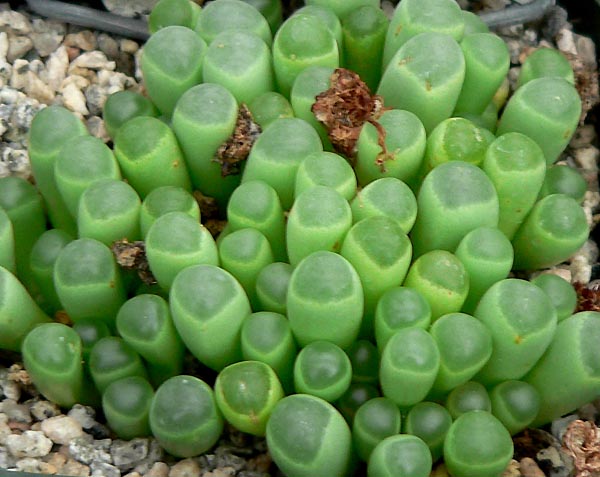
Fenestraria rhopalophylla, commonly known as Baby Toes, is a fascinating succulent with a unique adaptation that sets it apart from most other plants. Its finger-like leaves have translucent “windows” at the tips that allow light to penetrate deep into the plant’s tissues, enabling photosynthesis even when partially buried in sand. This remarkable feature helps the plant survive in its harsh desert environment where it might be covered by shifting sands. Baby Toes form small clusters and are prized by collectors for their unusual appearance and interesting growth habit.
Light Requirements
Baby Toes require bright light to maintain their compact growth and translucent windows:
- Ideal condition: Full sun to bright indirect light
- Indoor growing: South-facing window with at least 6 hours of direct sunlight
- Outdoor growing: Full sun in mild climates
- Low light effects: Leaves become elongated and windows may become less prominent
- Tip: They need strong light to develop their characteristic translucent tips
Watering Schedule
Like most desert succulents, Baby Toes prefer dry conditions and are prone to rot if overwatered:
- Growing season (Fall/Winter): Water every 3-4 weeks
- Dormancy (Spring/Summer): Water every 4-6 weeks or less
- Overwatering signs: Leaves become soft, mushy, or develop black spots
- Watering method: Water thoroughly but allow soil to dry completely between waterings
- Test: Only water when leaves start to wrinkle slightly
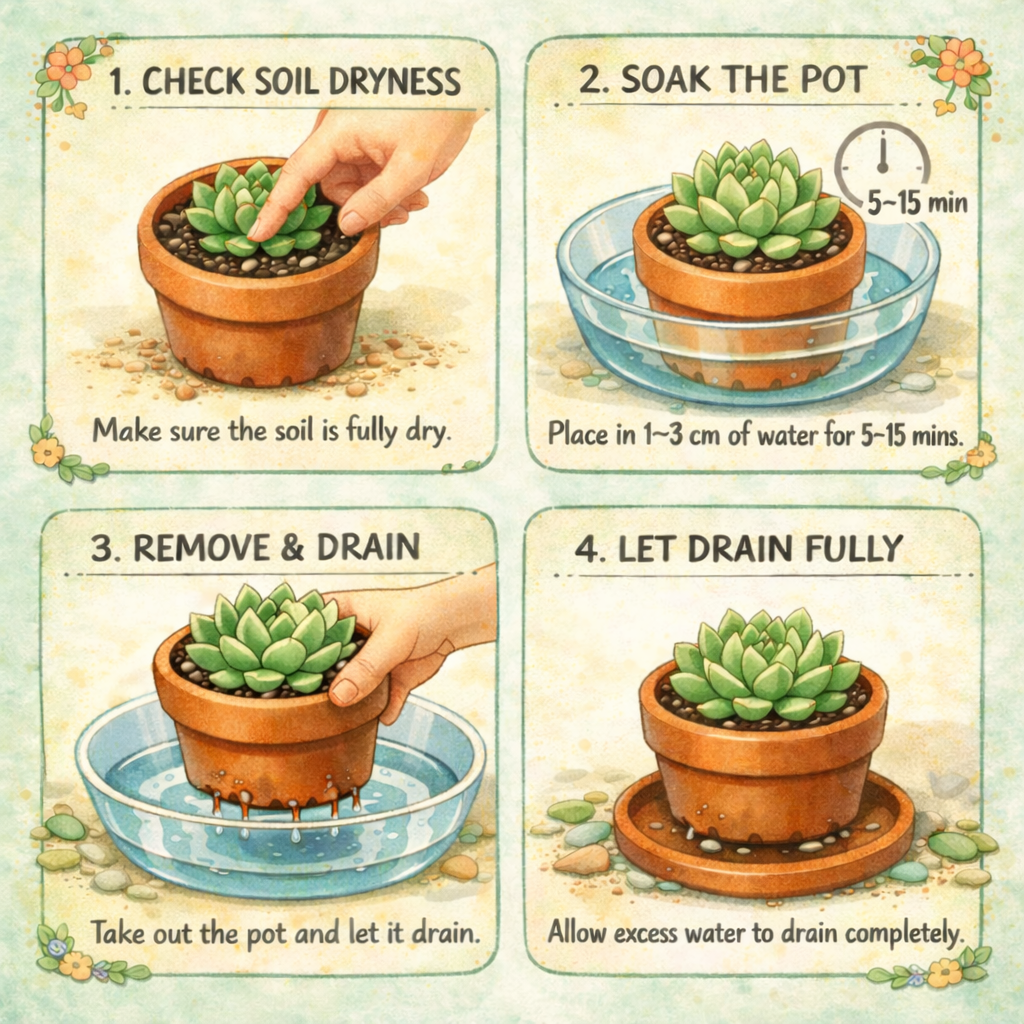
- Best watering method: Bottom watering is preferred over top watering. Place the pot in 1–3 cm of water for about 5–15 minutes, then remove it and let excess water drain completely. This helps prevent water from sitting between the leaves, which can easily lead to rot. Only do this when the soil is fully dry.
Soil Requirements
Excellent drainage is crucial to prevent root rot:
- Best option: Cactus or succulent soil with added pumice or coarse sand
- DIY mix: 50% potting soil, 30% perlite, 20% coarse sand
- Pot type: Deep pots with excellent drainage holes
- Burial tip: In nature, they grow partially buried; you can plant them deeper in pots
Temperature & Humidity
- Optimal temperature: 18-25°C (65-77°F)
- Humidity: Very low humidity preferred; they come from arid regions
- Cold tolerance: Can survive down to 7°C (45°F) but protect from frost
- Heat tolerance: Tolerate up to 35°C (95°F) with reduced watering
Propagation
Baby Toes can be propagated through division or seed:
- Division: Carefully separate offsets from the main plant
- Seed: Sow seeds on the surface of well-draining soil
- Timing: Best done during the growing season
Common Issues
- Root rot: Caused by overwatering or poor drainage
- Window fading: Insufficient light causes translucent tips to become opaque
- Pests: Watch for mealybugs and spider mites
- Splitting: Normal growth; don’t water until new growth appears
Special Care Notes
The translucent windows at the leaf tips are a remarkable adaptation:
- They allow light to reach photosynthetic tissues deep within the leaf
- In nature, this helps when the plant is partially buried by sand
- The windows should be clear and glassy when the plant is healthy
- If windows become cloudy, it usually indicates insufficient light or overwatering