Published
- 2 min read
Mountain Rose
Overview
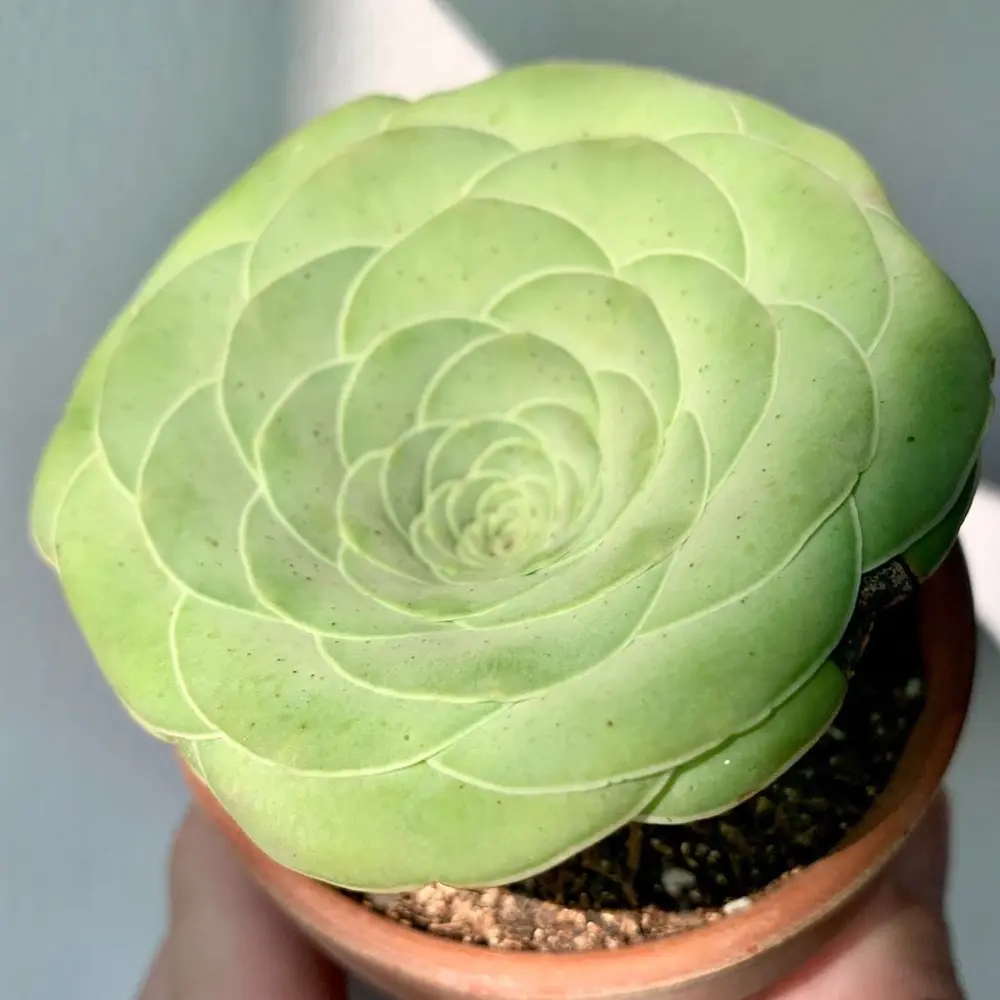
Mountain Rose is a distinctive Aeonium cultivar featuring layered leaves arranged in a rose-like rosette. It is native to mountainous regions and can display a range of tones depending on light conditions. Its symmetrical structure makes it a visually striking addition to any succulent collection.
Light Requirements
Aeonium Mountain Rose requires bright light to maintain its compact form:
- Ideal condition: Full sun to bright light
- Indoor growing: South-facing window with direct sun
- Light response: Strong light promotes compact growth
- Low light effects: Stretching and looser rosette
Watering Schedule
Mountain Rose prefers moderate watering with good drainage:
- Growing season (Spring/Summer): Water every 2–3 weeks
- Dormancy (Fall/Winter): Water every 3–4 weeks
- Overwatering: Causes stem or root rot
- Watering method: Water thoroughly, then allow the soil to dry before watering again
- Test: Soil should be dry before the next watering
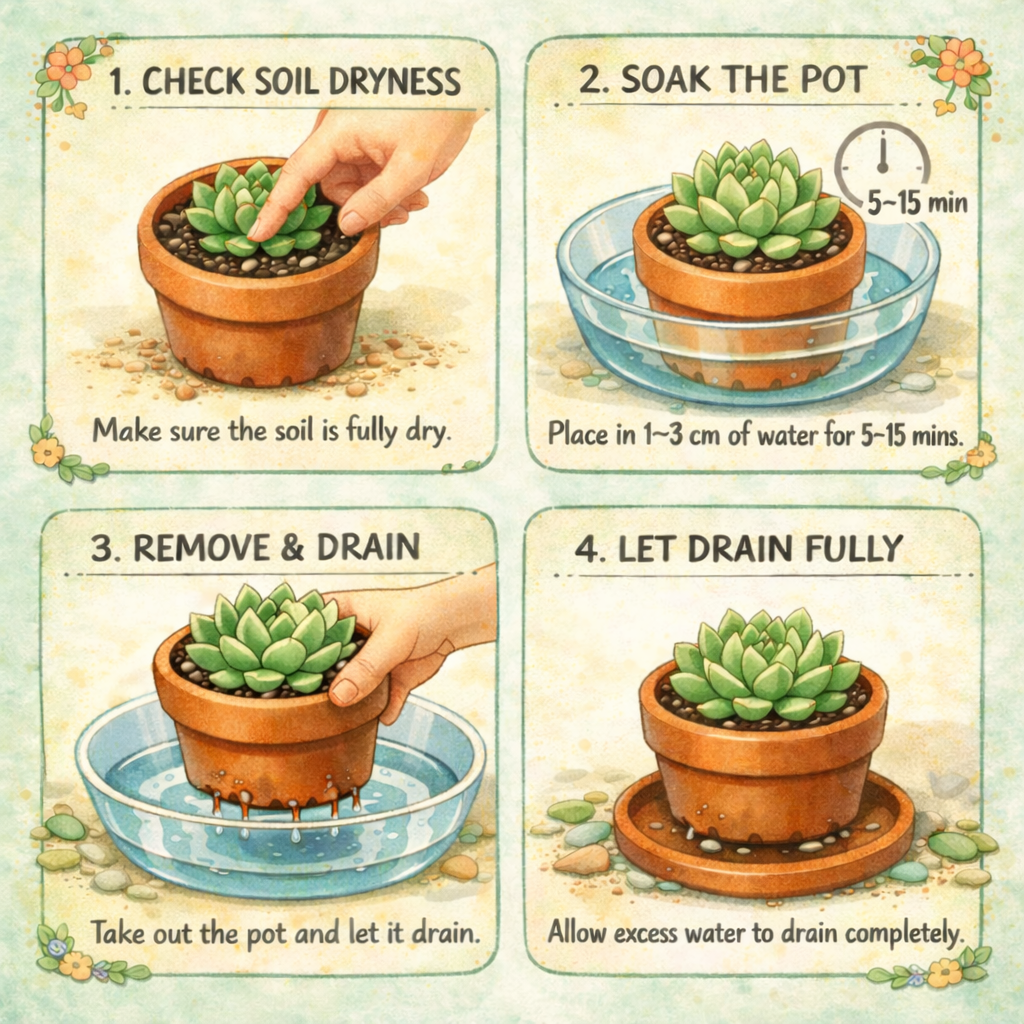
- Best watering method: Bottom watering is preferred. Place the pot in 1–3 cm of water for about 5–15 minutes, then remove it and let excess water drain completely
Soil Requirements
Fast-draining soil is essential for Aeonium species:
- Best option: Succulent or cactus soil mix
- DIY mix: Potting soil + 50% perlite, pumice, or mineral grit
- Drainage: Soil must drain quickly to prevent rot
- Pot: Terracotta recommended for better airflow
Temperature & Humidity
Mountain Rose tolerates mild temperatures and prefers dry air:
- Ideal temperature: 60–75°F (15–24°C)
- Minimum temperature: ~40°F (5°C, avoid frost)
- Humidity: Low humidity preferred
- Outdoor growing: Suitable for warm, frost-free climates
Propagation
Propagation is usually done through stem cuttings:
- Stem cuttings: Cut a healthy rosette with a short stem, let it callous, then plant in dry soil
- Best time: Spring or early summer
- Rooting time: Usually 2–3 weeks
- Difficulty: Easy to moderate
Common Issues
- Stretching: Caused by insufficient light
- Rot: Usually caused by overwatering or poor drainage
- Leaf drop: Can happen under stress or seasonal adjustment
- Pests: Watch for aphids, mealybugs, and spider mites
Tips
- Provide strong light to keep the rosette compact
- Avoid letting water sit in the center of the rosette
- Reduce watering during slower growth periods
- Ensure good airflow around the plant