Published
- 5 min read
Evolution of Custom Liquid Cooling — 2009 to 2014
Introduction
Between 2009 and 2014, I continuously evolved my personal desktop system — from basic air cooling to a fully engineered dual-GPU custom water-cooling build.
Throughout the entire journey, I used the Lian Li PC-K58 chassis — the same case that traveled with me between Chongqing and Urumqi multiple times, surviving courier shipping and full rebuilds.
This project became more than a hobby.
It was my first engineering lab, where I learned precision measurement, fluid dynamics, electrical safety, and the art of iteration.
Every rebuild reflected not only better cooling performance, but also a clearer understanding of how systems interact physically and electrically.
Stage 1 – The Beginning (2009–2010)
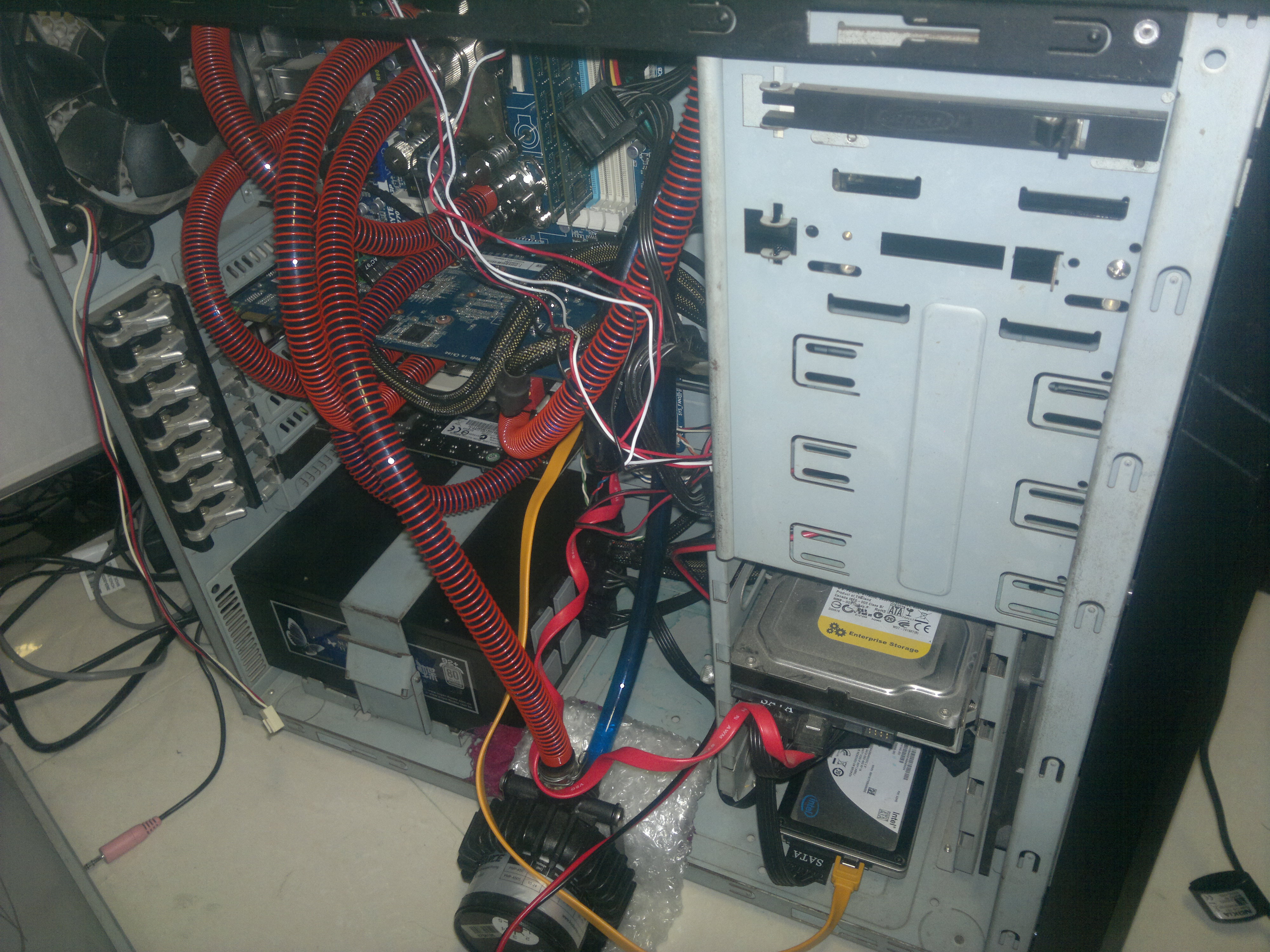
My first attempt at custom liquid cooling was purely experimental — built from curiosity, not aesthetics.
I used Bykski, an early domestic brand, with flexible tubing and minimal cable management.
The goal was simple: see if I could make it work.
- The system functioned, but the tubing routing was chaotic.
- I used coiled anti-kink springs even where they weren’t needed.
- No cable sleeving or layout planning — everything was about experimentation.
⬇📸 Photo 01: The earliest version — functional but messy, showing unorganized tubing and random wiring.
Stage 2 – Learning Through Modification (2011–2012)
In this phase, I began refining.
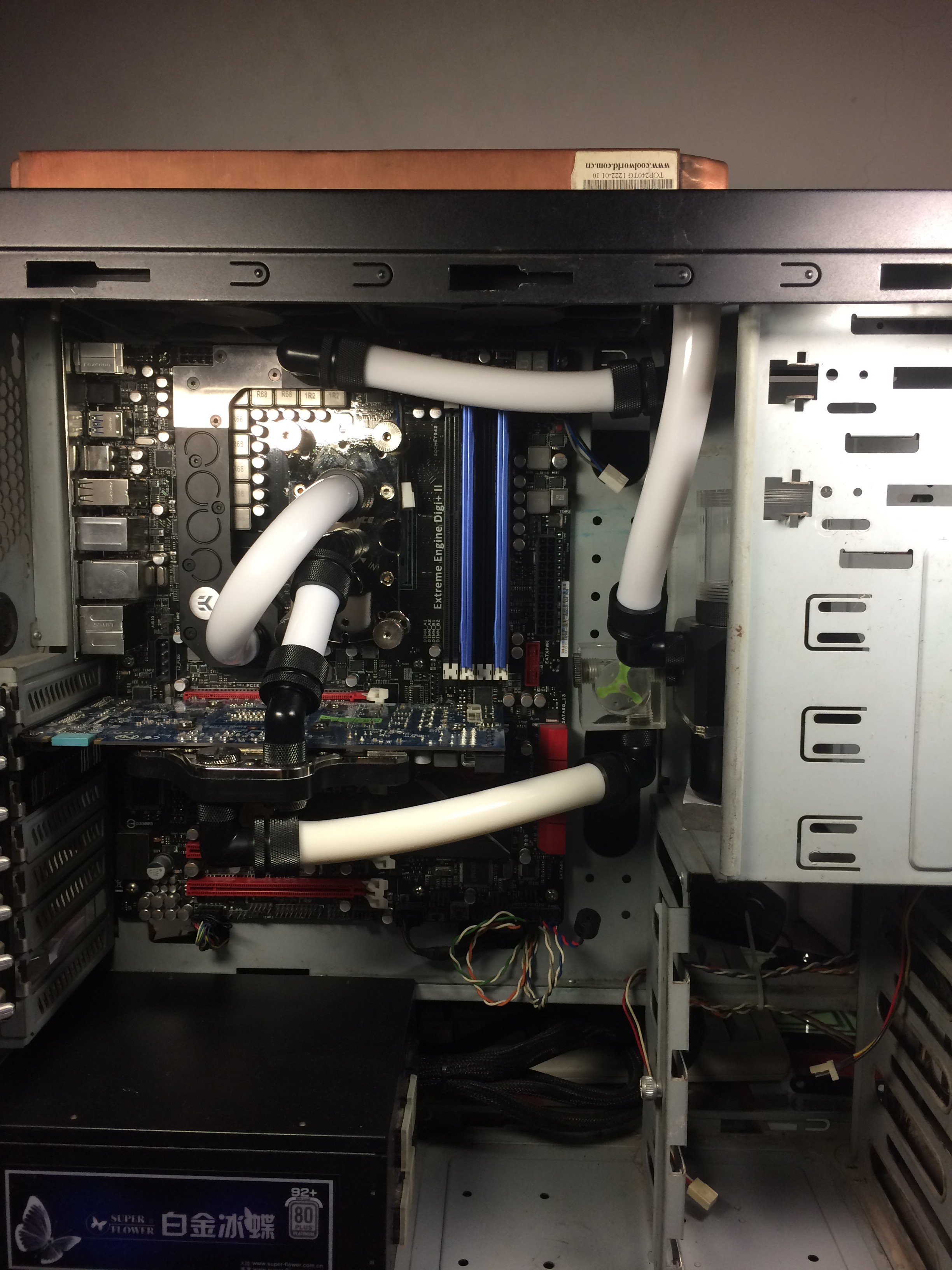
I switched to Barrow fittings and started to consider visual balance and internal airflow.
The build still relied on flexible tubing, but I improved routing, pressure balance, and pump stability.
I also started working with electrical modification —
resoldering pump wires, re-pinning modular connectors, and learning proper grounding.
⬇📸 Photo 02: My second-stage setup, cleaner and more structured, though still limited by budget and part compatibility.
Stage 3 – Engineering Precision (2013–2014)
This is where the project transformed from “custom PC” to “precision engineering.”
By this time, I had moved to EK, Koolance, and Bitspower components —
brands known for their machining accuracy and leak-free design.
The system evolved into a dual-GPU (GTX 680 SLI) loop using rigid acrylic tubing,
hand-crafted modular silver-plated cables, and a redesigned pump circuit.
🧊 Final Build Overview
- Hard-tube loop with exact measurements for each bend
- Full dual-GPU + CPU + MOSFET loop
- Custom reservoir, flow meter, and pressure-equalization valve
- Individually sleeved, silver-plated cables (all hand-crimped and soldered)
- Optimized power wiring, including capacitor integration for voltage stability
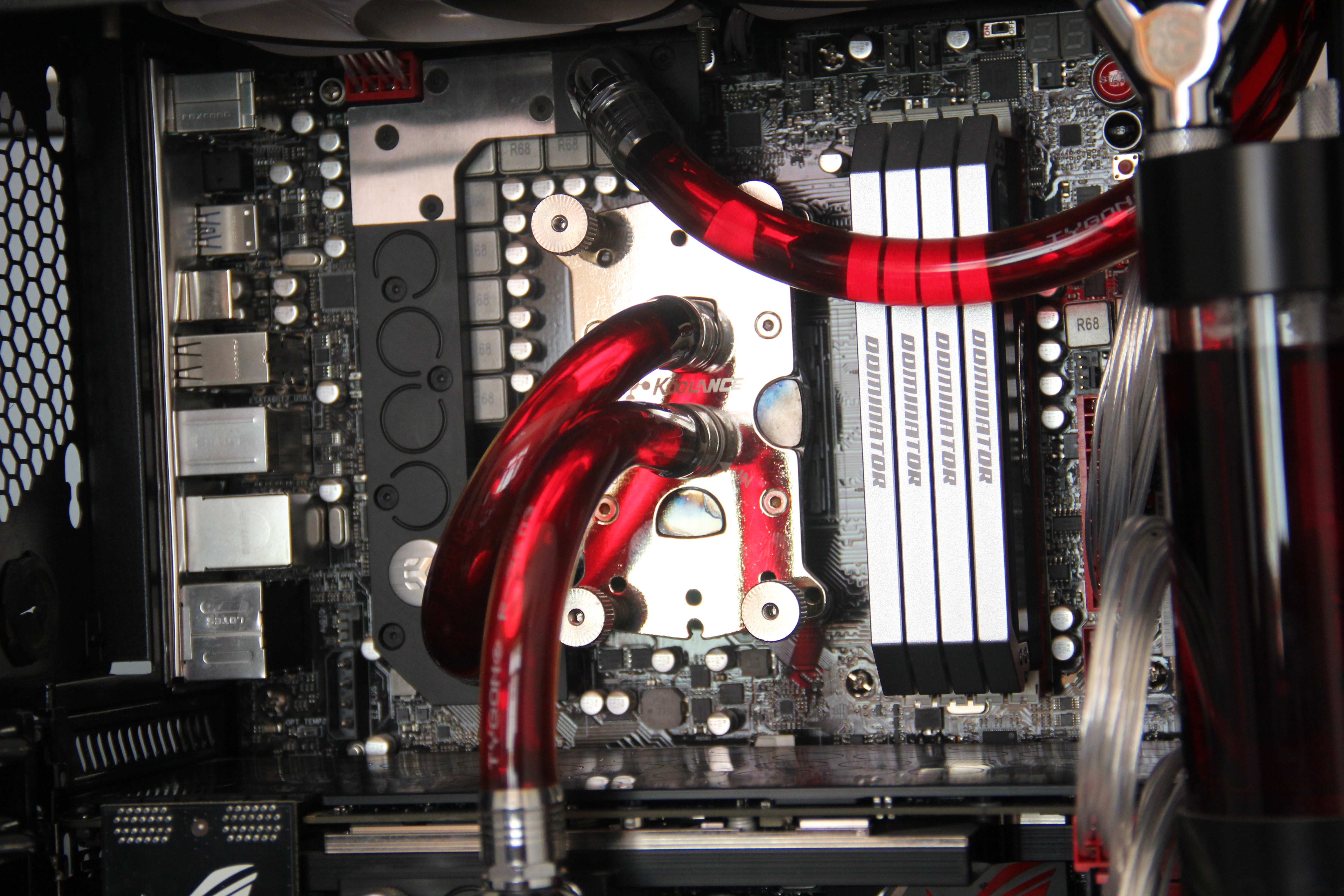
⬇📸 Photo 03: Final build, side panel closed — red coolant visible through the rigid loop.
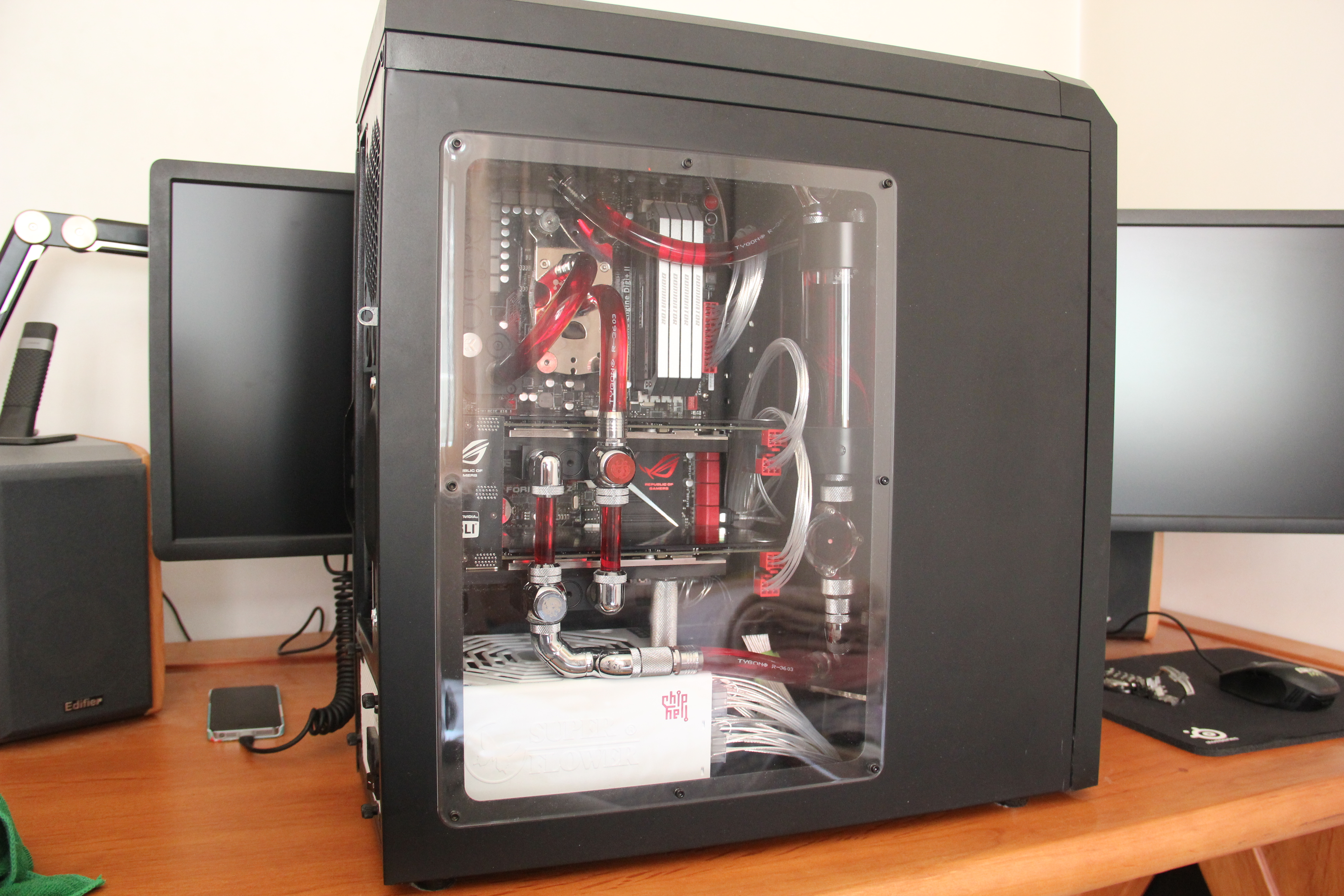
⬇📸 Photo 04–05: Interior view with reservoir, silver cables, and flow meter.
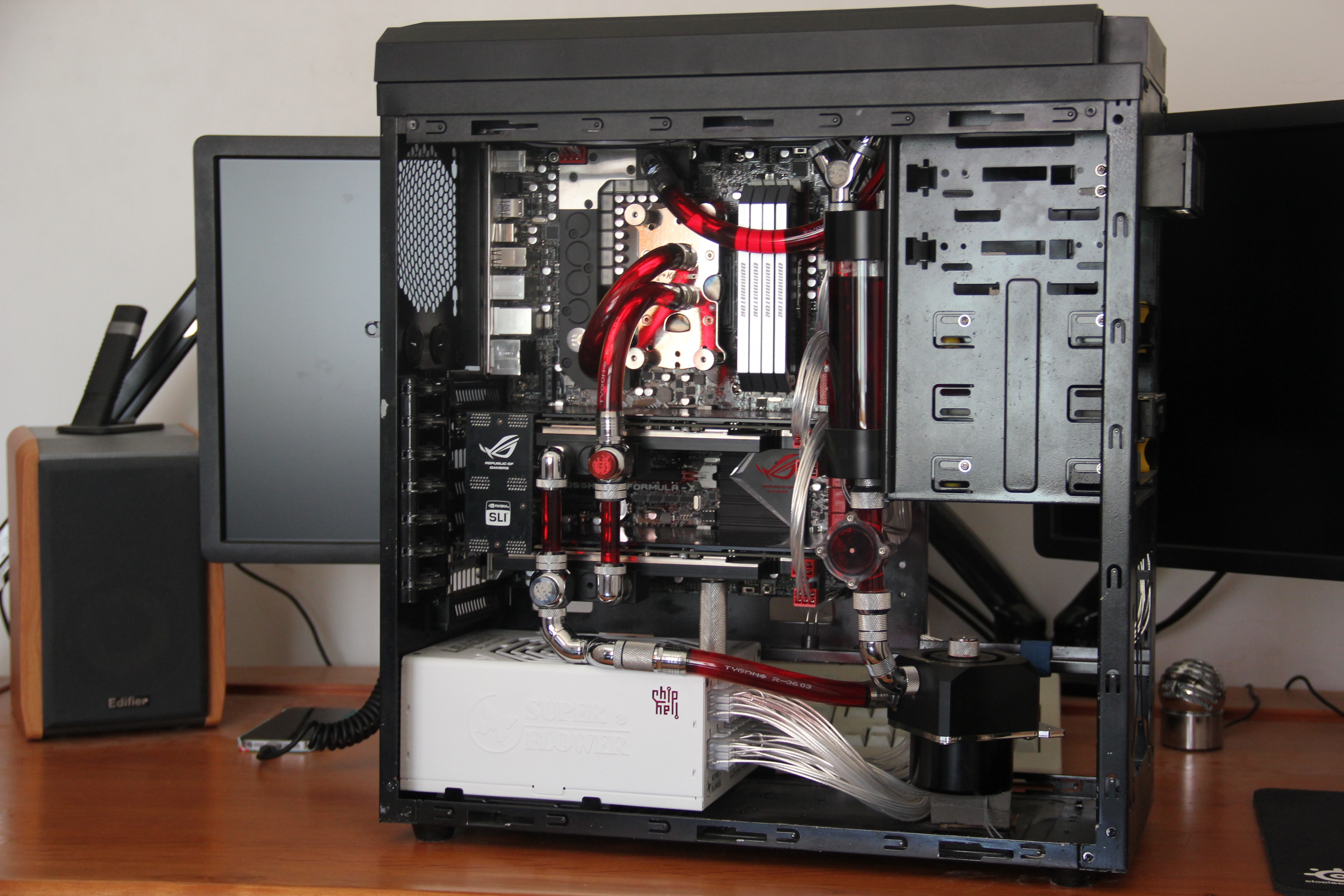
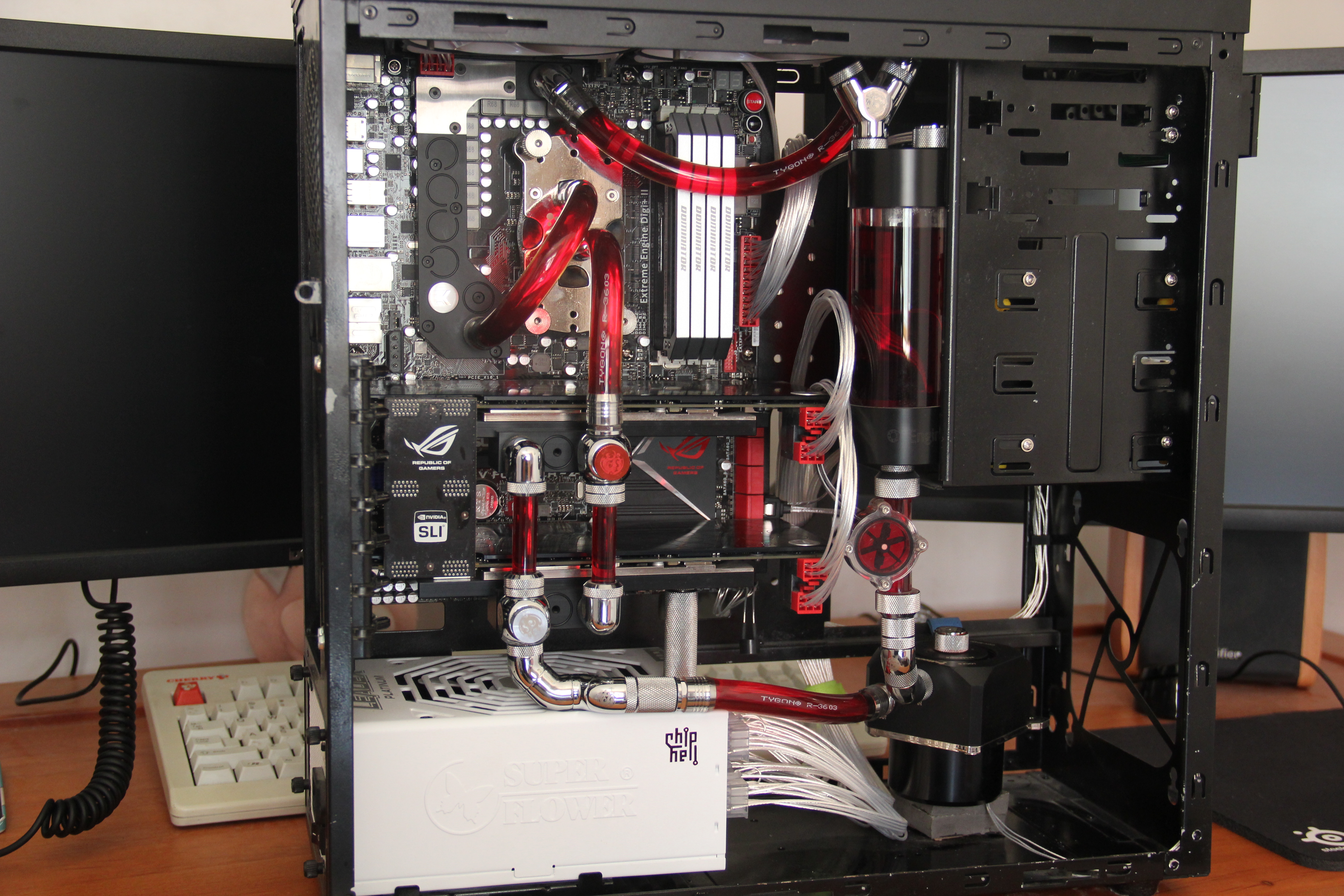
⬇📸 Photo 06: CPU block and loop path from GPU → CPU → MOSFET → radiator → reservoir → pump.
⬇📸 Photo 07: Dual GPU close-up with precise hard-tube measurements and NVIDIA SLI bridge. 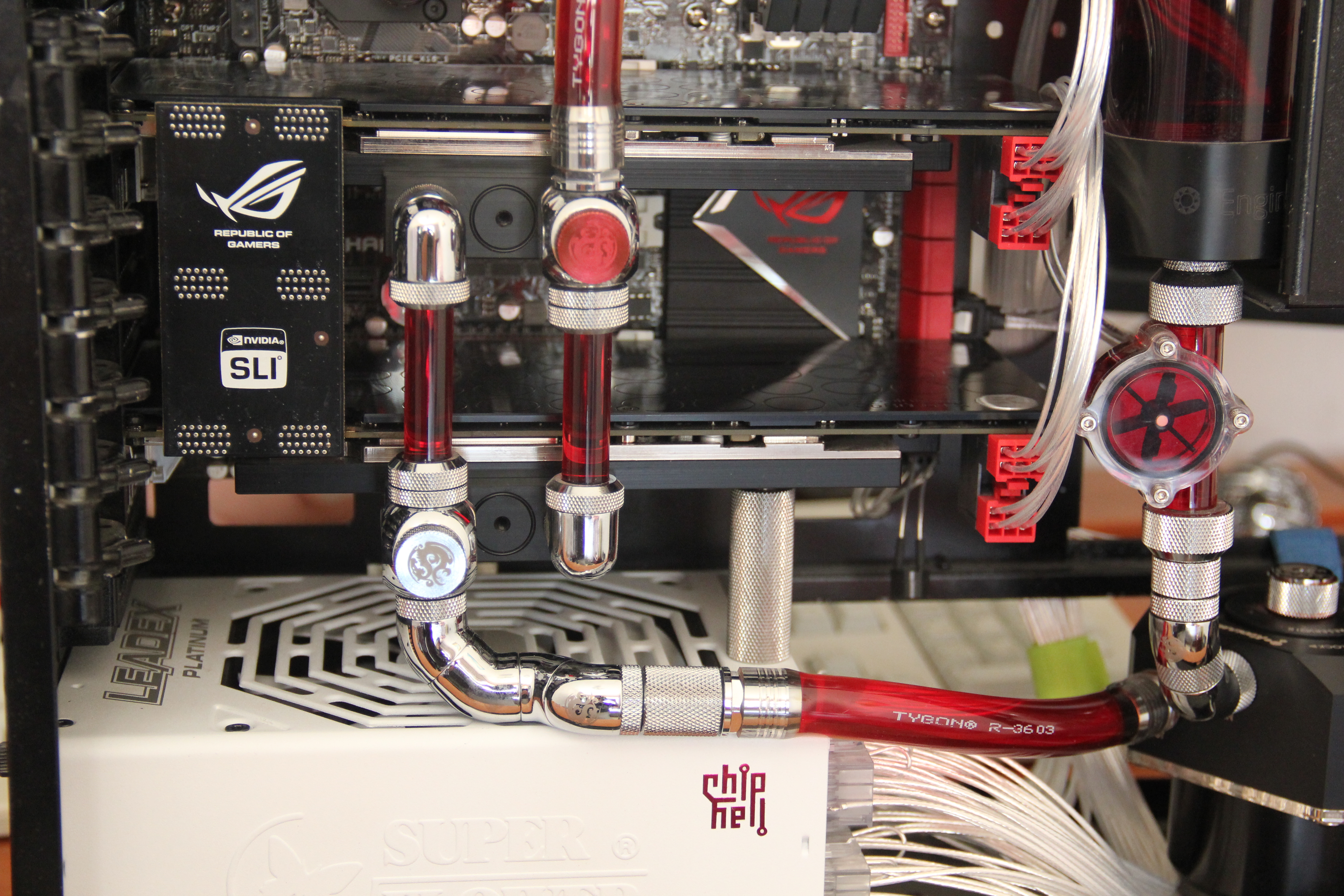
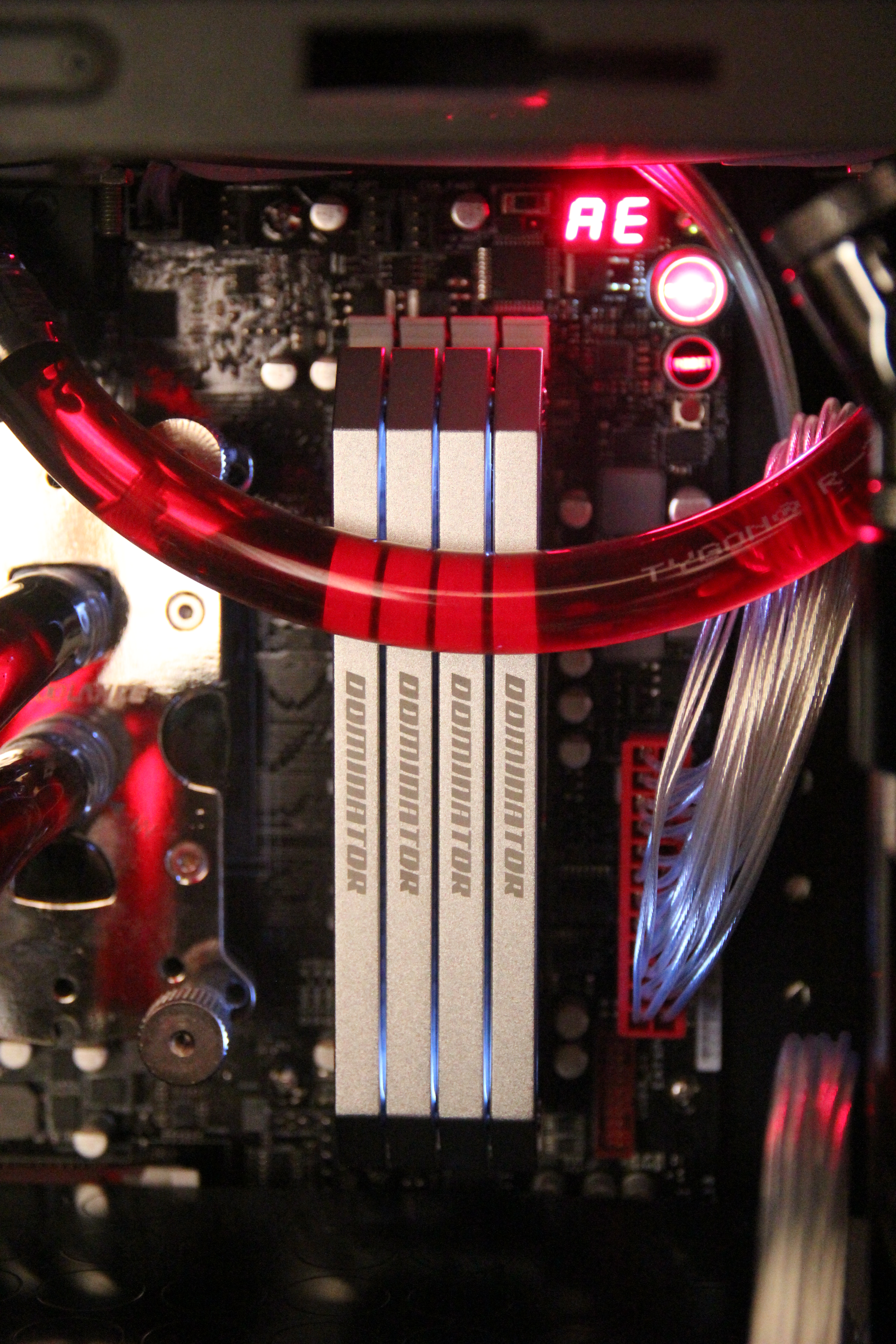
⬇📸 Photo 08: Memory close-up with subtle lighting effects.
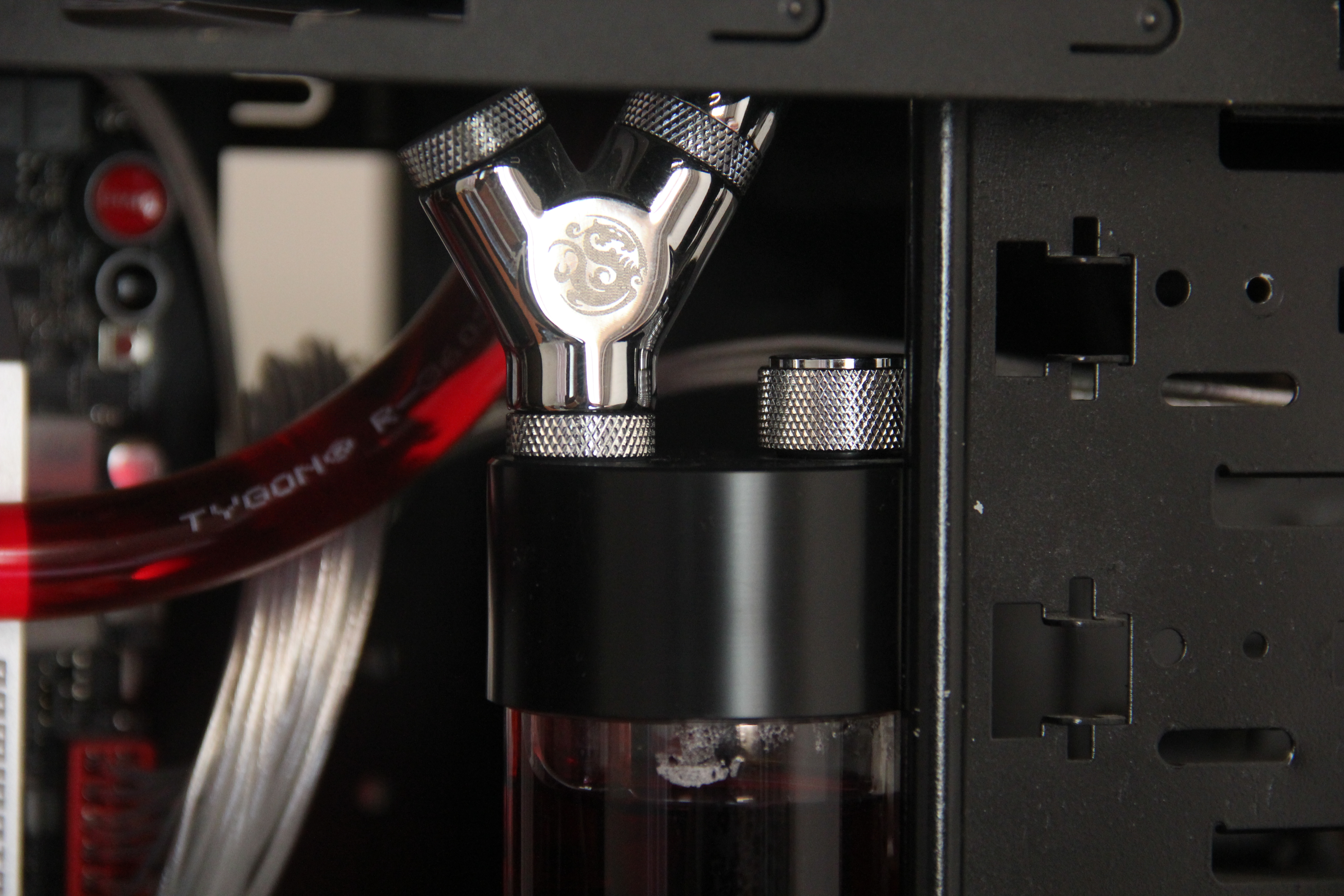
⬇📸 Photo 09: Y-junction for radiator return; one port reserved for filling, another for air pressure release.
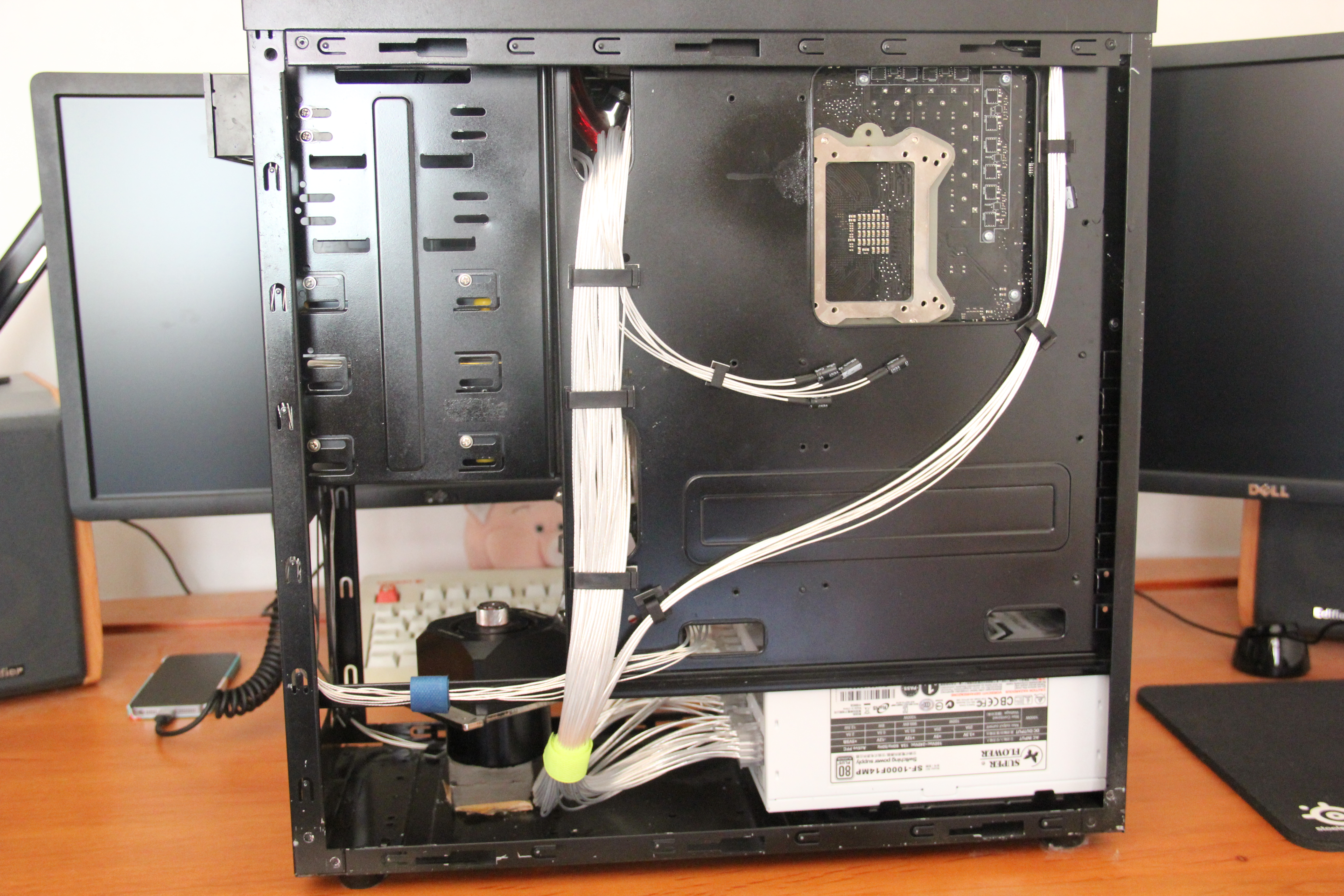
⬇📸 Photo 10: Rear cable routing — fully symmetrical and structured.
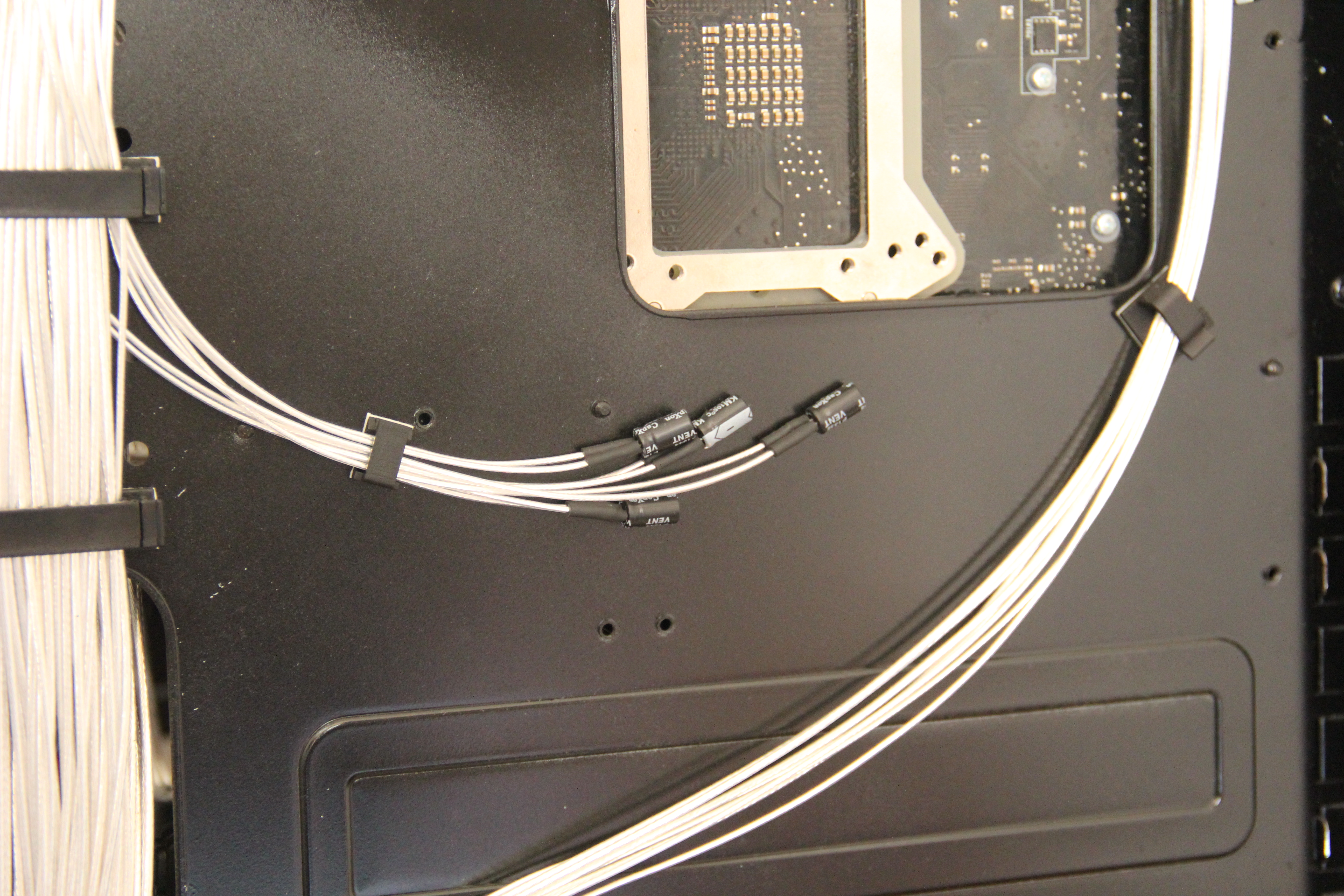
⬇📸 Photo 11: Capacitor hub (part of Super Flower power system). These capacitors stabilize transient load changes and reduce voltage ripple to GPU/CPU power rails.
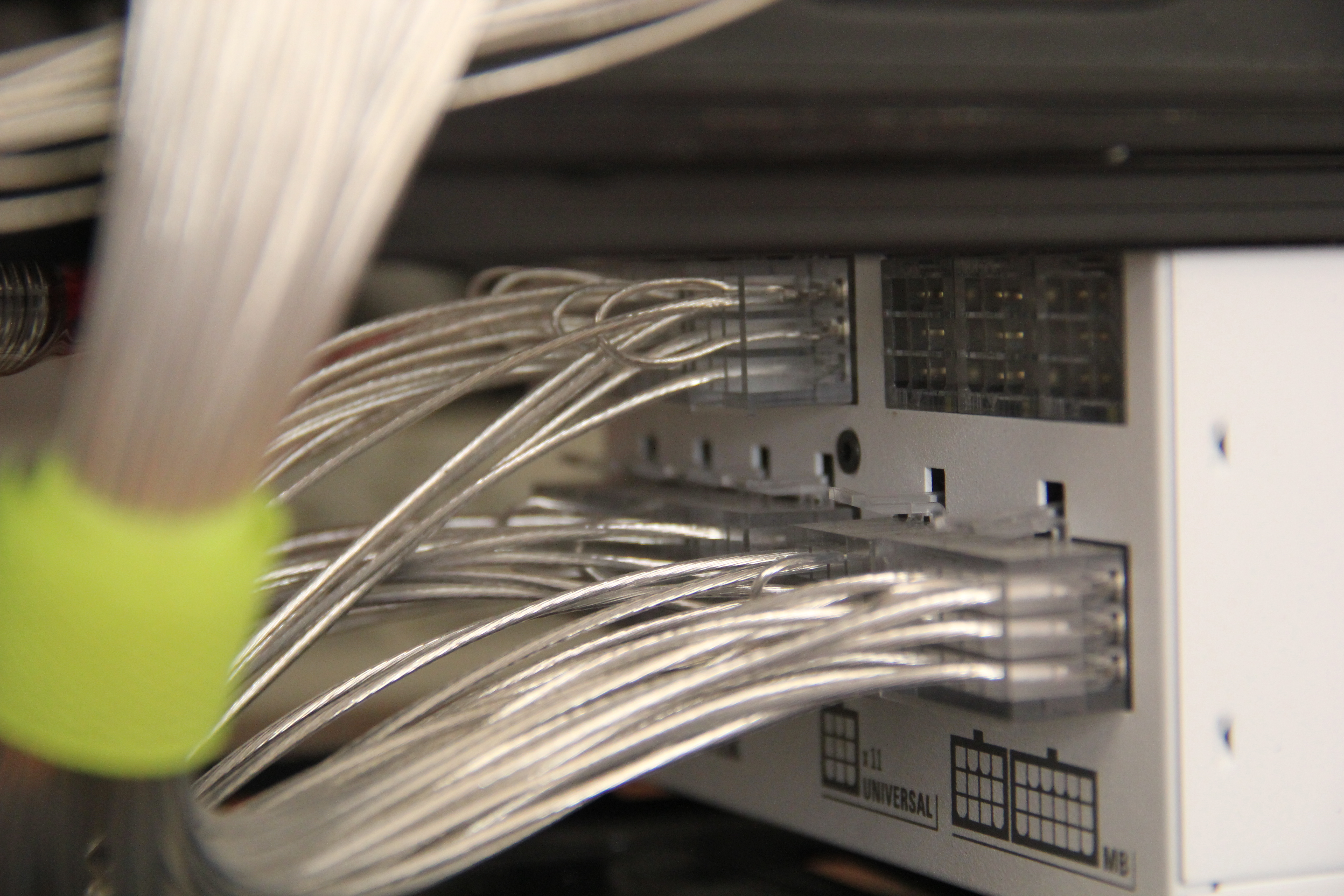
⬇📸 Photo 12: Power connector detail with integrated lighting; custom 9-grid connector rebuilt pin-by-pin.
Cable & Electrical Re-Engineering
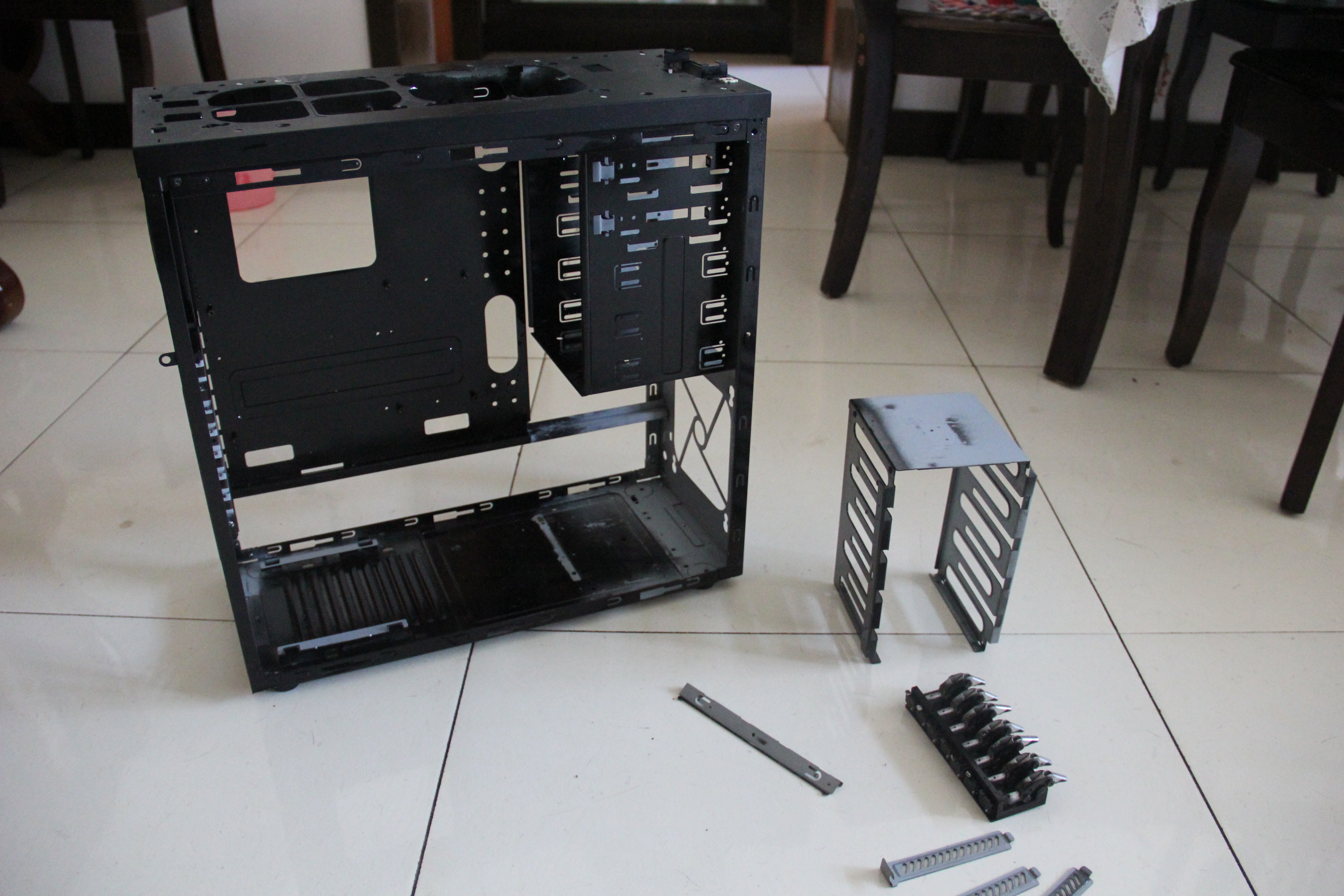
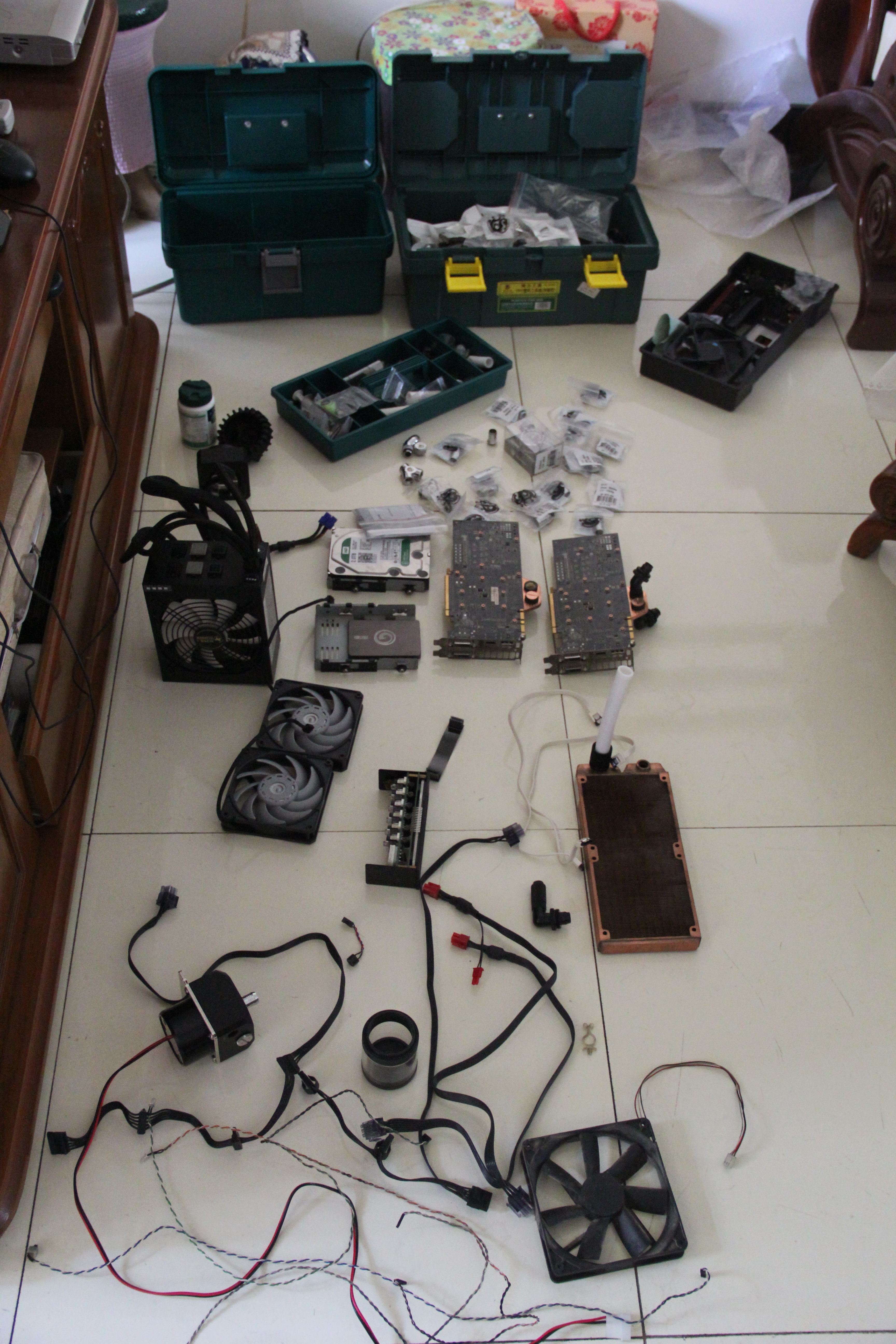
Before rebuilding the power lines, I completely disassembled the system.
⬇📸 Photo 13: Chassis fully stripped for black coating.
⬇📸 Photo 14: All components laid out before reassembly.
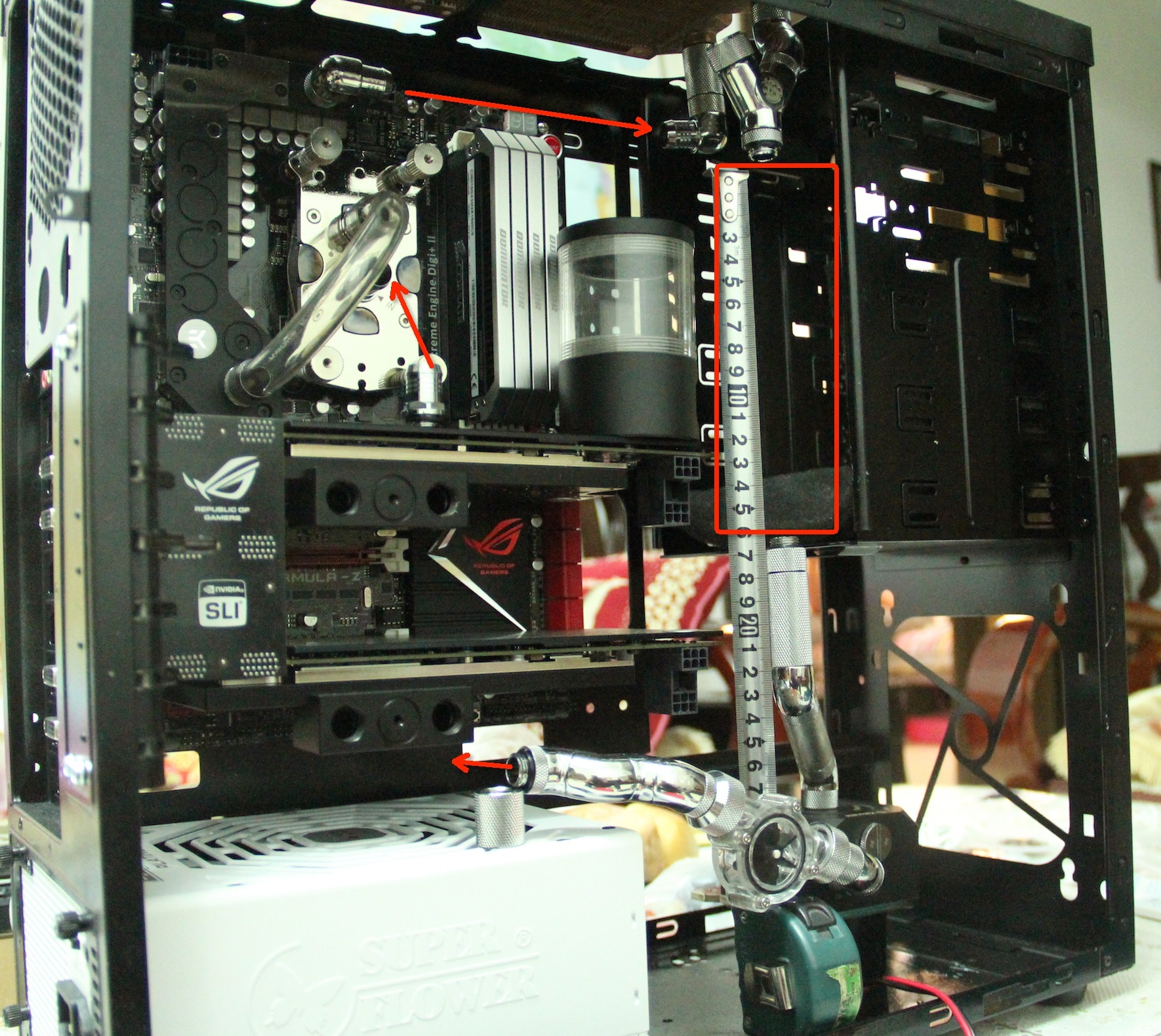
⬇📸 Photo 15: Measuring and planning internal layout and loop routing.
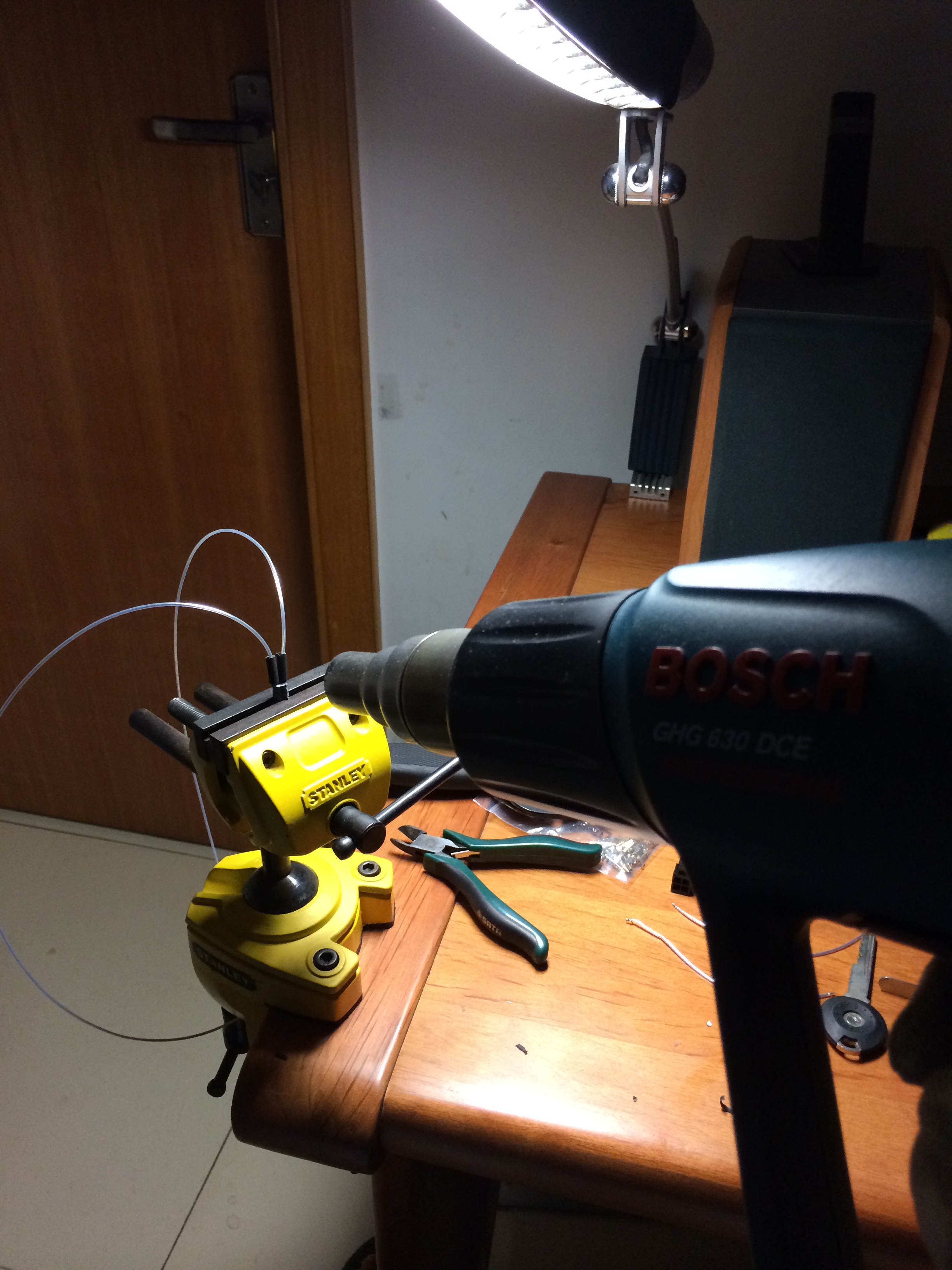
⬇📸 Photo 16: Soldering silver-plated wires and sealing joints with heat-shrink for insulation.
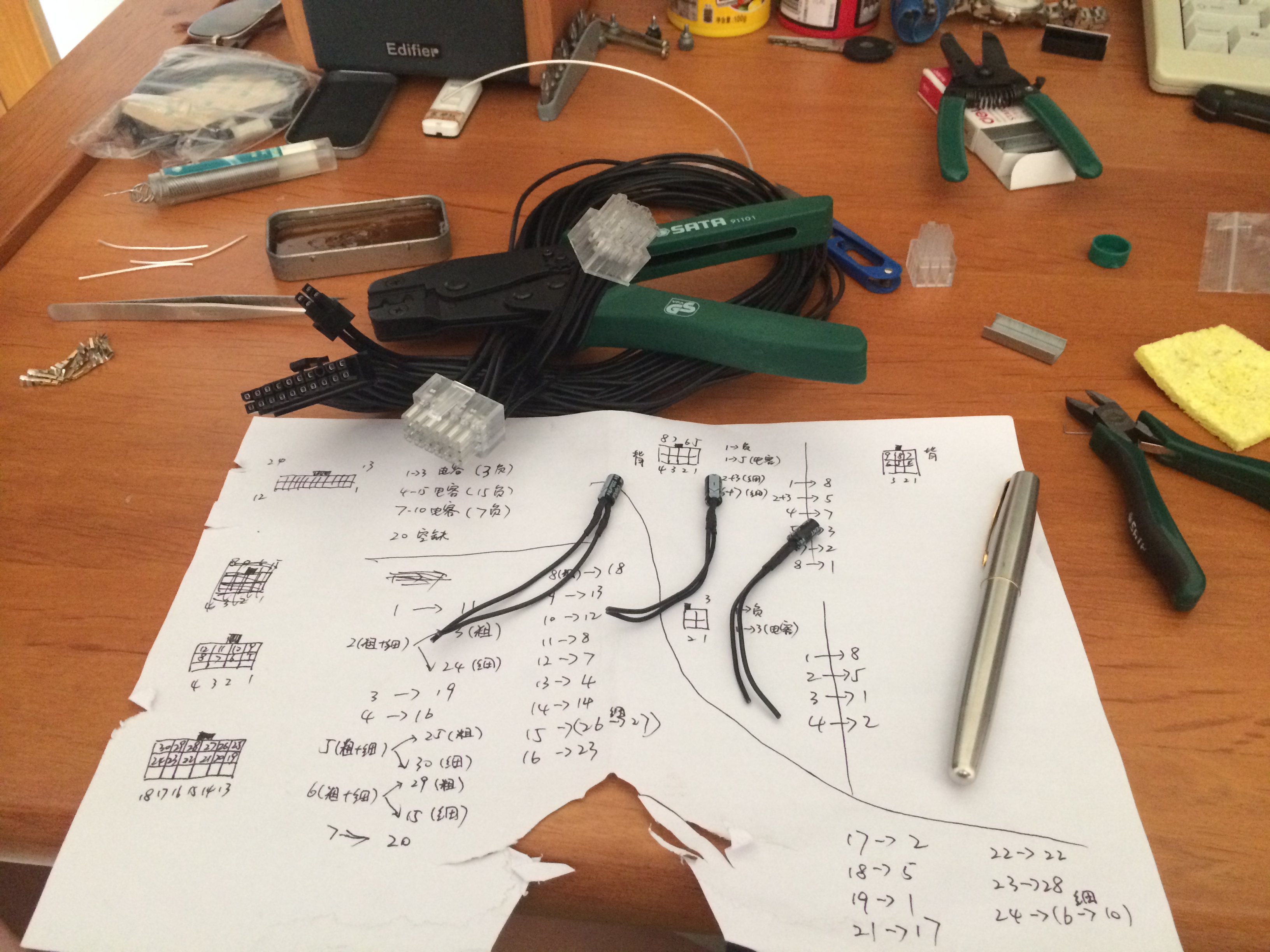
⬇📸 Photo 17: My handwritten pin-mapping notes — critical to prevent connector misalignment that could destroy hardware.
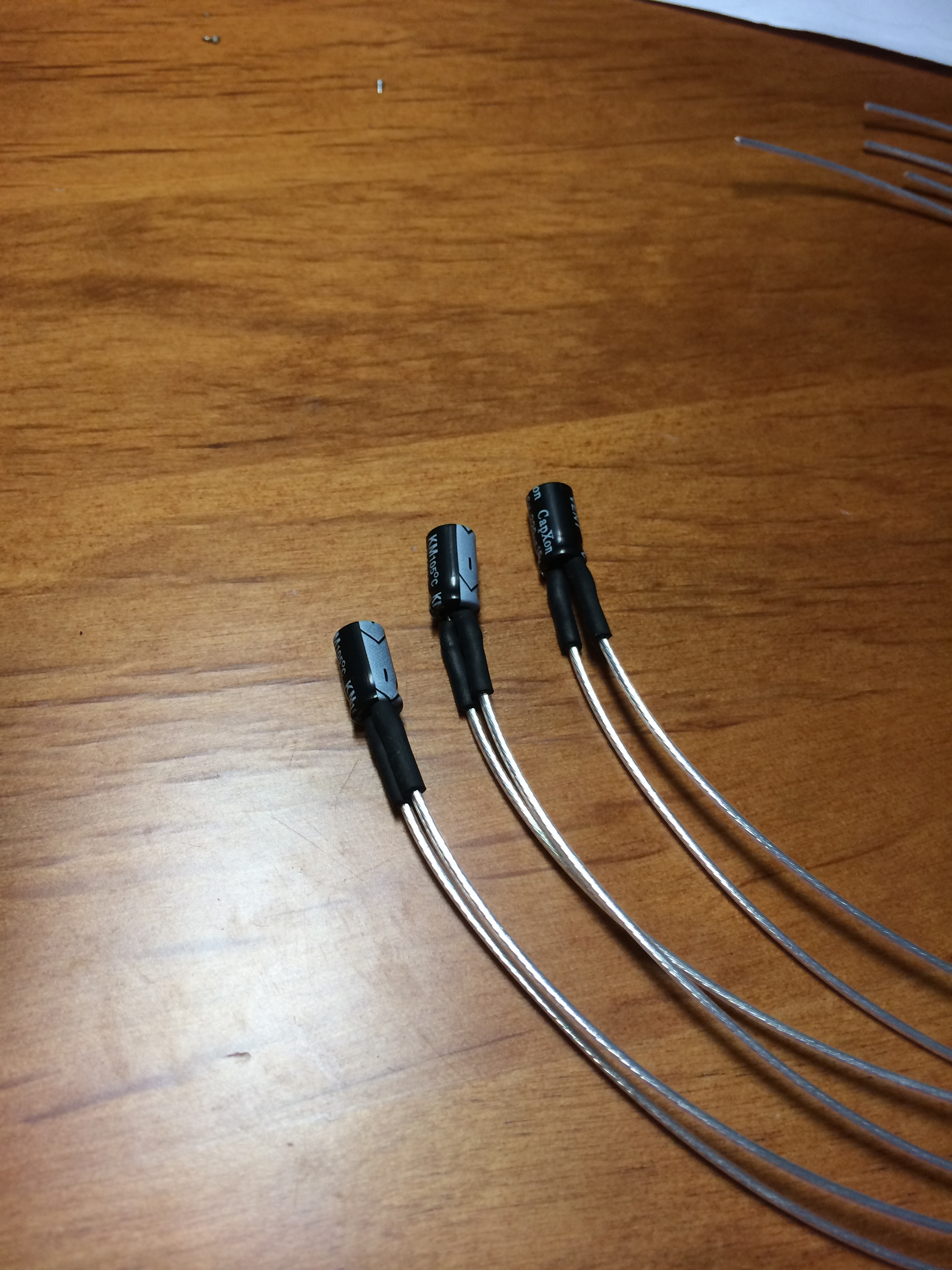
⬇📸 Photo 18: Original Super Flower modular capacitors after re-wiring with silver cables.
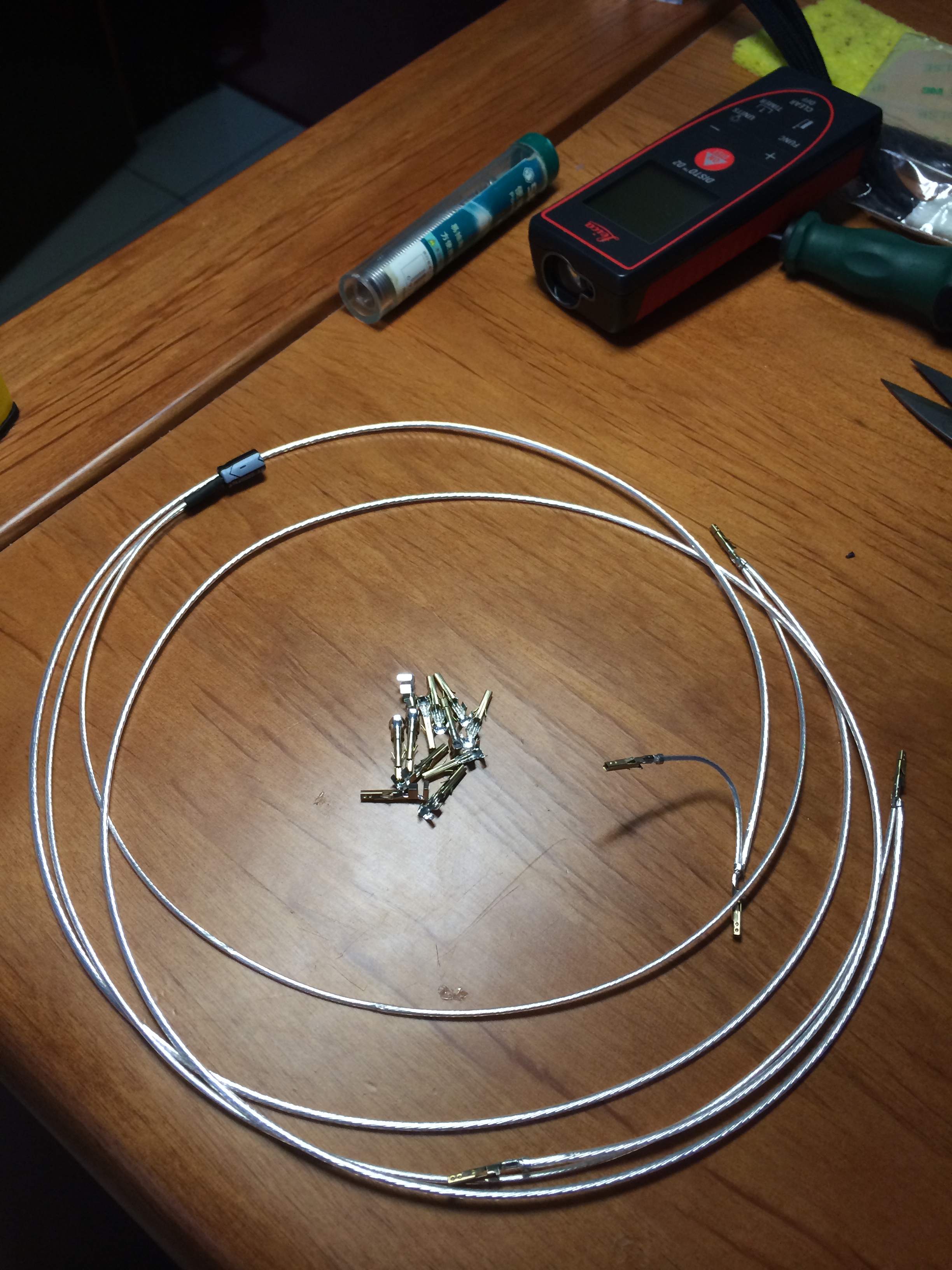
⬇ Photo 19: Gold-plated terminal pins — Molex Mini-Fit Jr series, crimped using a precision ratchet crimper.
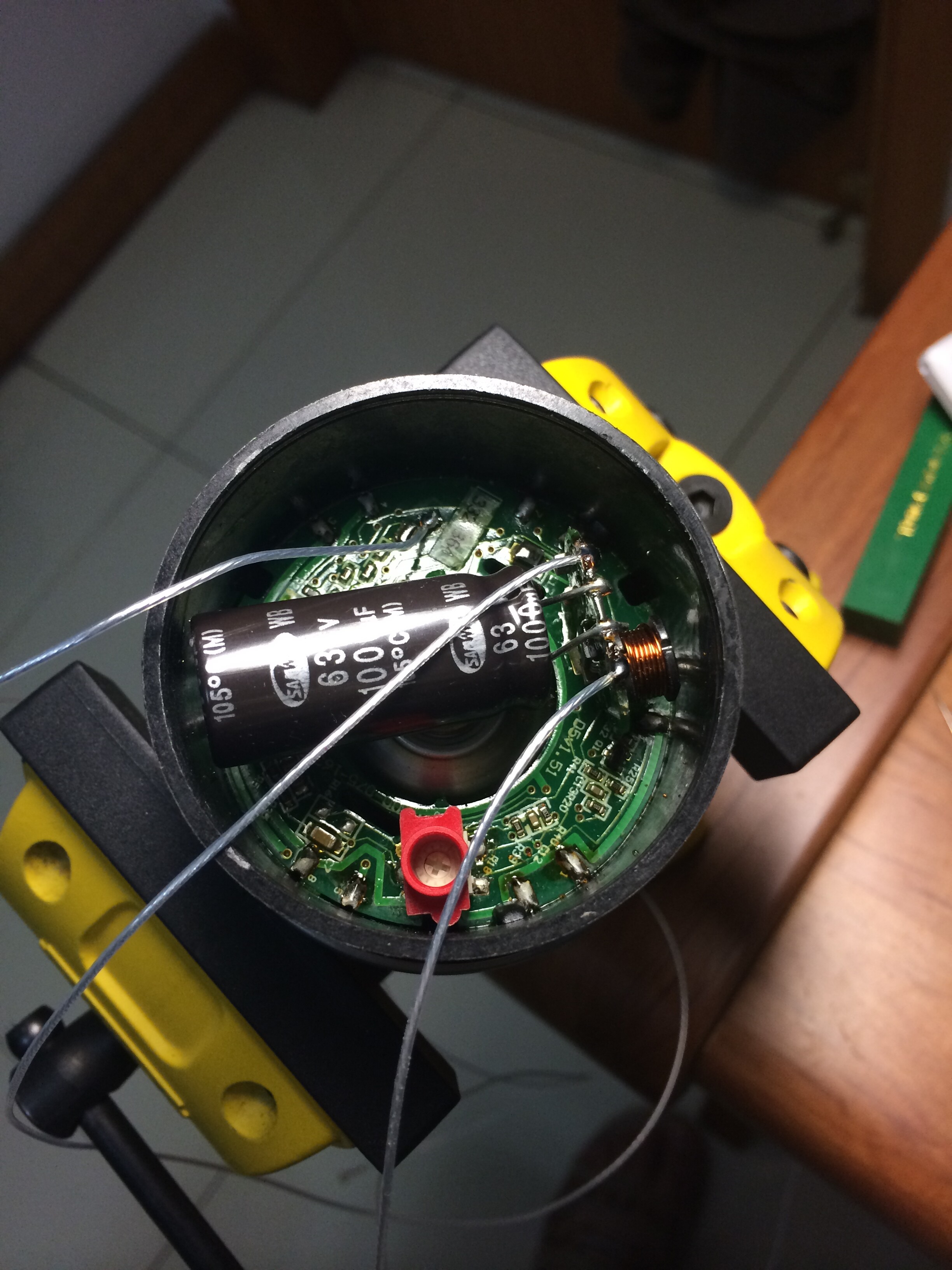
⬇📸 Photo 20: Modified pump wiring with added grounding for electrical safety and reduced interference.
Technical Highlights
- Cooling Loop Design: Optimized flow sequence reduced temperature differential by ~5 °C under full load.
- Power Delivery Optimization: Hand-built modular cables ensured consistent resistance across all rails.
- Noise Reduction: Grounding and pump isolation significantly cut electrical hum.
- Pressure Management: Custom valve system allowed fine-tuning of internal loop pressure.
- Maintenance Efficiency: Modular cabling and quick-release fittings simplified teardown and refilling.
Reflections & Lessons Learned
Over five years, I built, disassembled, and rebuilt this same system countless times.
What began as curiosity turned into a training ground for real engineering discipline —
measurement accuracy, risk control, thermal efficiency, and structured thinking.
Every failure taught me something:
how current behaves under load, how micro-vibrations affect fittings,
and how patience defines craftsmanship.
This long process shaped how I now approach server diagnostics, power stability, and hardware reliability —
with both technical precision and respect for the invisible details that make systems last.
Final Reflection
📸 Photo 06 (again): The finished masterpiece — a combination of function, aesthetics, and precision.
This system stayed with me until 2018, when I left Urumqi for Chongqing.
Even now, I still remember every detail of it — every screw, every connector, every loop I built with my own hands.
In life, we all have things that accompany our growth — machines, places, even people — yet none of them can stay with us forever.
Not even our parents. And now, as a father myself, I understand this truth more deeply:
I cannot be with my daughter for all her life, either.
But the moments we share, the things we build, and the memories forged in those quiet hours of focus —
these are what remain.
They shine on in the future,
as a quiet reminder that while everything changes, what we once cared for becomes eternal.